Don't miss our holiday offer - up to 50% OFF!

How AI and Fashion Will Change in 2026: Trends Shaping the Future

AI and fashion 2026 are bringing major changes to the way people discover, design, and shop for clothing. From personalized style recommendations and virtual try-ons to AI-powered trend forecasting and sustainable production, artificial intelligence is helping fashion become smarter, faster, and more personalized. As technology continues to evolve, the combination of AI and human creativity will shape the future of the fashion industry.
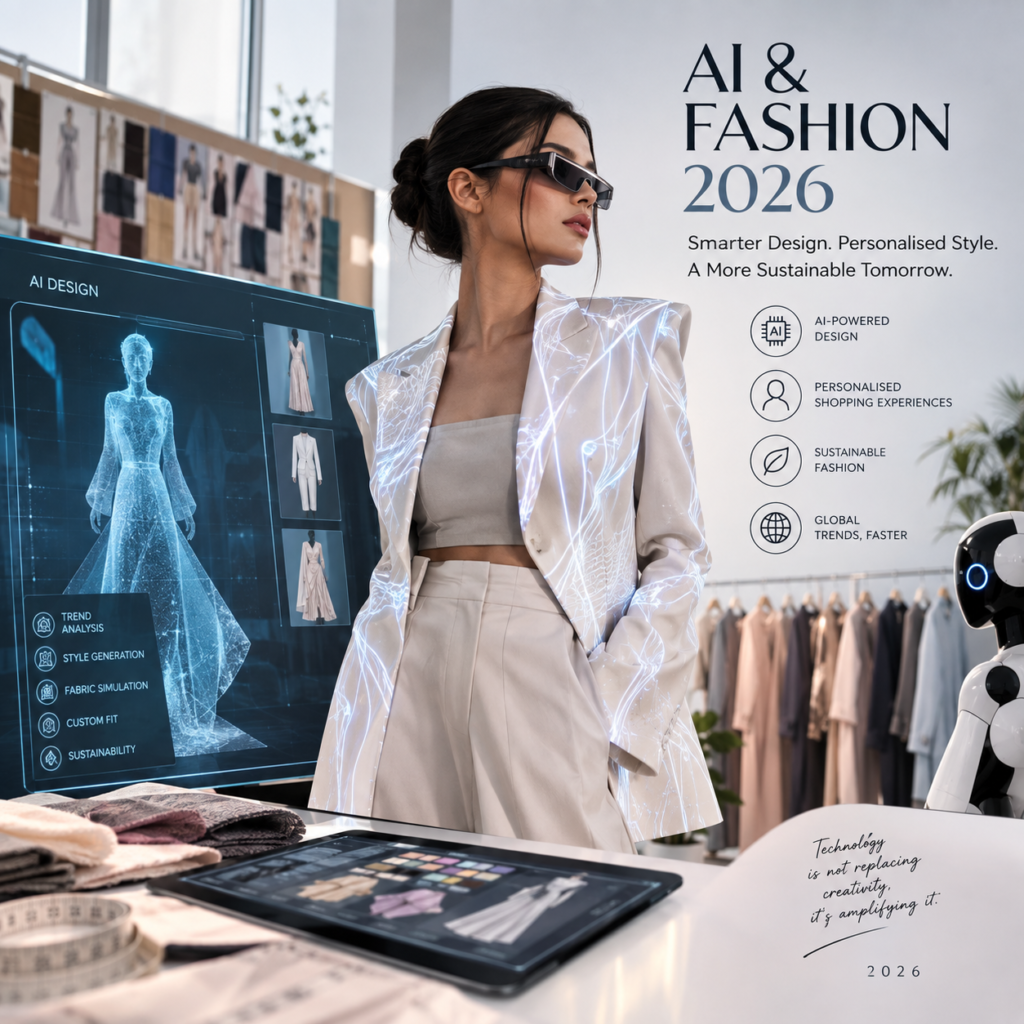
AI and Fashion 2026
The relationship between AI and fashion 2026 is becoming more influential than ever. Artificial intelligence is changing how fashion brands design collections, predict trends, personalize shopping experiences, manage inventory, and connect with customers. What once seemed like futuristic technology is now becoming part of everyday fashion.
In 2026, the fashion industry is moving toward a more personalized, technology-driven, and efficient approach. From AI-generated designs to virtual styling assistants, technology is creating new opportunities for both fashion businesses and consumers. The growing influence of AI and fashion 2026 is helping brands understand their customers and respond to changing fashion preferences more effectively.
AI-Powered Fashion Design
One of the biggest changes brought by AI and fashion 2026 is the way clothing is designed. Fashion designers can use AI tools to analyze colors, patterns, customer preferences, previous collections, and emerging trends. These insights can help designers develop new ideas faster and explore a wider range of creative possibilities.
AI does not necessarily replace human creativity. Instead, it can work as a creative assistant, helping designers explore different silhouettes, fabrics, colors, and patterns. Designers can experiment with multiple concepts before turning their favorite ideas into physical garments.
This combination of human creativity and artificial intelligence can make the fashion design process faster, more flexible, and data-driven. As AI and fashion 2026 continue to develop together, designers can use technology to support their creative decisions while maintaining their individual artistic identity.
Personalized Fashion Shopping
Personalization is another major development in AI and fashion 2026. Instead of showing every customer the same products, AI systems can analyze shopping behavior, preferences, previous purchases, and browsing activity to provide more relevant recommendations.
For example, an online fashion store could recommend outfits based on a customer’s preferred colors, previous purchases, measurements, or personal style. AI-powered virtual stylists may also suggest complete outfits instead of recommending individual products.
This can make online shopping more convenient while helping customers discover styles that match their preferences. As fashion platforms collect more customer insights, AI can help create increasingly personalized shopping experiences.
Virtual Try-Ons and AI Styling
Another important trend in AI and fashion in 2026 is the growth of virtual try-on technology. Shoppers can increasingly use digital tools to visualize how clothing, accessories, or different styles may look before making a purchase.
AI-powered styling tools can also help customers create outfits for specific occasions. Someone preparing for a wedding, office event, vacation, or casual weekend could receive outfit suggestions based on the occasion and their existing wardrobe.
These technologies can make online fashion shopping more interactive and may reduce some of the uncertainty associated with buying clothing online. Virtual styling can also help customers experiment with different combinations without physically trying on multiple garments.
| Aspect | Fashion in the 1980s | Fashion in 2026 |
|---|---|---|
| Design | Bold, creative, designer-led | AI-assisted and data-driven |
| Shopping | Mostly physical stores | Online + personalized shopping |
| Technology | Limited technology | AI, AR, virtual try-ons |
| Trends | Magazines, TV, celebrities | AI trend forecasting + social media |
| Personalization | Limited | AI-powered recommendations |
| Sustainability | Less focus | Greater focus on sustainable production |
| Styling | Human stylists | Human + AI styling assistants |
AI and Sustainable Fashion
Sustainability is another area where AI and fashion in 2026 can have an important impact. Fashion companies can use AI to analyze demand and improve inventory planning. Better predictions may help brands produce quantities that more closely match customer demand, potentially reducing excess stock and waste.
AI can also assist with material research, supply-chain optimization, demand forecasting, and product lifecycle analysis. As consumers become more interested in responsible fashion, technology may help brands make better-informed decisions about materials and production.
However, AI itself also requires computing resources. Therefore, the fashion industry’s growing use of technology will need to be balanced with broade